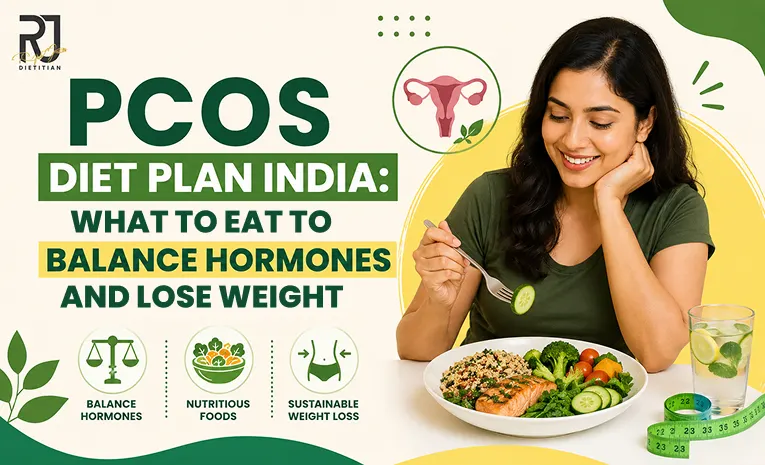
You are eating less than your friends. Walking every morning. The weight is not moving. Periods are irregular. Face keeps breaking out. Tired by noon despite sleeping eight hours. And every doctor says the same thing: just eat healthy and exercise more.
As if you were not already doing that.
Here is the truth. With PCOS, the problem is not how much you eat. The problem is what those foods are doing to your insulin. Until you understand that one thing, no diet plan will work.
What Is Actually Happening in Your Body
PCOS is a hormonal condition, yes. But its root driver in most Indian women is insulin resistance. Your body produces insulin after every meal to move sugar into cells. With insulin resistance, cells stop responding. The body compensates by secreting more of the hormone insulin. High insulin tells the ovaries to produce more androgens. Those excess androgens disturb ovulation, trigger irregular periods, cause facial hair, worsen acne, and make the body store fat aggressively, especially around the abdomen.
This is why standard calorie cutting fails. You can eat less and still keep insulin high if foods spike blood sugar repeatedly through the day. The goal is not fewer calories. The goal is fewer insulin spikes.
The Indian Diet Advantage Nobody Explains Correctly
Indian food gets blamed unfairly for PCOS. Rice is villainised. Roti avoided. Dahi skipped. Mostly wrong.
Traditional Indian food is actually well-suited for PCOS when eaten correctly. Dal, sabzi, whole grain roti, curd, cooked vegetables. Metabolically balanced, naturally high in fibre and protein.
The problem arrives with maida parathas, white rice in excess, packaged namkeen, biscuits with chai, mithai, and fried evening snacks. These create exactly the insulin spikes that worsen PCOS. Remove them and the foundation of Indian eating is strong.
What to Eat: The PCOS Diet Framework for India
Every meal needs three things present together: protein, fibre, and a healthy fat. This slows digestion, blunts the insulin spike, and keeps hunger away.
Whole grains over refined: Jowar roti, bajra, ragi, brown rice, whole wheat are all fine. White maida in any form, including bread and biscuits, needs to go.
Protein at every meal: Moong dal, rajma, chana, eggs, paneer, and curd are your best options. Most Indian women with PCOS eat very little protein and very high carbohydrate. Reversing that ratio changes everything.
The right fats: Small amounts of desi ghee, cold-pressed mustard or sesame oil, a handful of almonds or walnuts daily. These reduce inflammation and support hormonal function. Vanaspati and excess refined oil damage it.
Vegetables freely: Palak, methi, broccoli, bottle gourd, ridge gourd, beans, all leafy greens. Eat them at lunch and dinner without restriction.
Indian spices are your allies: Haldi reduces inflammation. Overnight-soaked methi seeds on an empty stomach improve insulin sensitivity. Dalchini in chai or warm water does the same. Real metabolic effect when used consistently.
Fruit, chosen carefully: Guava, berries, papaya, and pear are good. Mangoes, bananas, and grapes in excess raise blood sugar quickly. One serving daily is fine.
What to Stop and When to Eat: Both Matter Equally
Packaged biscuits and namkeen with morning chai create an insulin spike before your day even begins. Sweetened beverages including juices, flavoured milk, and cold drinks are sugar delivery systems with zero benefit for PCOS. Skipping meals followed by large meals later causes extreme insulin swings. Late-night eating after nine pm is particularly damaging because insulin sensitivity is naturally lower at that hour.
Timing is just as important as food choice. Make lunch your largest meal. Keep dinner smaller and earlier. Eat breakfast within an hour of waking up. A carbohydrate-heavy dinner creates more metabolic disruption than the same meal eaten at noon. This one shift alone, without changing anything else, improves blood sugar patterns significantly in most women with PCOS.
Diagnosis: Where Wrong Advice Keeps You Stuck
The most common mistake seen in consultation at ReviveQii Clinic by Dr. Rajat Jain is women following generic PCOS diet charts downloaded from the internet, without any assessment of their specific insulin levels, thyroid function, or androgen profile.
That is not a food failure. That is a planning failure.
Lean PCOS behaves differently from PCOS with obesity. Thyroid-complicated PCOS needs a different approach entirely. Treating all three with the same printed chart produces partial results at best. What we see often in consultation is that once the specific hormonal pattern is understood, dietary adjustments become targeted and results follow quickly.
Honest Truth About PCOS Weight Loss
It is slower. It will take longer than your friend without PCOS eating the same way. That is insulin resistance, not your failure.
A loss of even five to seven percent of body weight improves ovulation, reduces androgens, and regularises periods. The goal in the beginning is not a six-kilogram drop. It is metabolic improvement. Weight follows that.
It takes time. It is worth it.
Why ReviveQii Clinic by Dr. Rajat Jain
That’s what that looks like in real life:
- Hormonal and metabolic profiling done before any diet plan is created
- Insulin resistance, thyroid, and androgen levels assessed together, not separately
- Diet built around your lab profile and real Indian food, not a printed chart
- Progress tracked across hormonal markers, not just weight on a scale
- Transparent consultation, honest timelines, no generic packages
Patients consistently report that a plan built around their individual numbers changes outcomes entirely.
Frequently Asked Questions
Can I eat rice with PCOS?
Yes, in moderation. Eat it with dal and sabzi, never alone. Brown rice or hand-pounded rice is better than polished white.
Is intermittent fasting good for PCOS?
Some women benefit. Others find it increases cortisol and worsens symptoms. Not universally right. An assessment helps decide.
How long before results show?
Improved energy and reduced bloating within two to three weeks. Hormonal improvements across two to three menstrual cycles.
Should I avoid dairy completely?
Full-fat dairy in excess can worsen androgens for some women. Low-fat curd and paneer in moderate amounts are generally fine.
Enough.
Stop following a plan made for someone else’s hormones. Book a consultation at ReviveQii Clinic by Dr. Rajat Jain. Understand your pattern. Build a diet that actually matches your body.
Eat right for your hormones. Everything else follows.