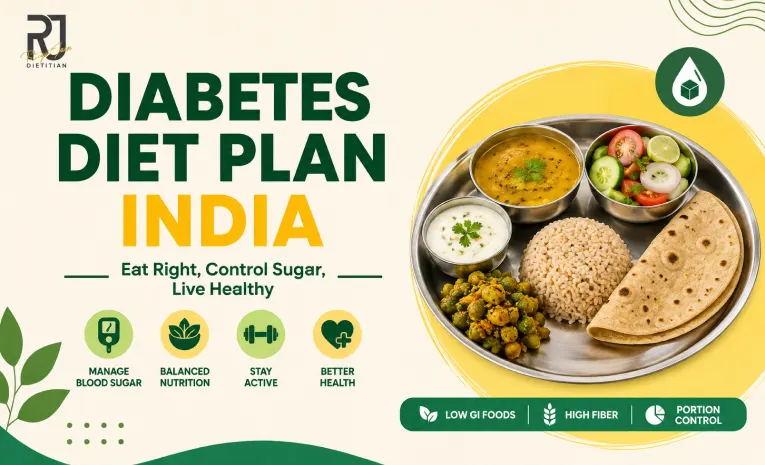
A Diabetes Diet Plan in India should focus on balanced meals with complex carbohydrates, high-fiber foods, adequate protein, and healthy fats. The right food choices and portion control can help manage blood sugar levels while allowing you to enjoy familiar Indian foods.
What Is a Diabetes Diet Plan?
A diabetes diet plan is a structured way of choosing and portioning foods to help maintain healthy blood glucose levels. It does not mean completely avoiding carbohydrates or eating bland food.
A healthy Indian diabetes diet generally includes whole grains, vegetables, pulses, lean proteins, low-glycemic fruits, nuts, and controlled portions of carbohydrates.
Get personalised diabetes nutrition guidance from Dietitian Rajat Jain, Book Consultation Now.
Indian Plate Method for Diabetes
The Indian Plate Method is a simple way to manage food portions while maintaining a balanced meal.
- Half Plate – Non-Starchy Vegetables: Include vegetables such as lauki, bhindi, karela, palak, methi, cauliflower, cabbage, and fresh salads.
- Quarter Plate – Complex Carbohydrates: Choose controlled portions of whole-wheat or millet rotis, such as jowar, bajra, and ragi, or a small serving of brown rice.
- Quarter Plate – Protein: Include dal, beans, paneer, tofu, curd, or other suitable protein sources.
This method helps create balanced meals by combining carbohydrates with fiber and protein.
Daily Diabetes Diet Chart for Indians
The following is a sample Indian diabetic food chart that can be modified according to individual nutritional needs:
| Time | Meal | Food Options |
| Early Morning | Light Start | Warm water with lemon or soaked methi seeds + 5 almonds |
| Breakfast | Balanced Meal | Vegetable oats upma, besan cheela, or idli with sambar |
| Mid-Morning | Light Snack | Guava, apple, or papaya + unsweetened green tea |
| Lunch | Main Meal | 1–2 multigrain/millet rotis or a small portion of brown rice + dal + sabzi + salad + curd |
| Evening | Healthy Snack | Roasted chana, makhana, or unsweetened buttermilk |
| Dinner | Light Meal | Grilled paneer, vegetable soup, dalia, or light vegetable preparation |
Portion sizes should be adjusted according to individual calorie and carbohydrate requirements.
Foods to Include in a Diabetes Diet
A healthy diabetes diet should include fiber-rich foods, complex carbohydrates, lean proteins, and healthy fats to support balanced nutrition and better blood sugar management.
- Whole grains: Oats, brown rice, whole wheat, quinoa, and millets such as jowar, bajra, and ragi.
- Pulses and legumes: Moong dal, masoor dal, chana, rajma, and beans provide protein and fiber.
- Non-starchy vegetables: Include palak, methi, lauki, bhindi, karela, cabbage, and cauliflower.
- Low-GI fruits: Choose whole fruits such as guava, apple, papaya, and berries in appropriate portions.
- Protein-rich foods: Include dal, paneer, tofu, curd, eggs, fish, and lean meat as suitable.
- Healthy fats: Add almonds, walnuts, seeds, mustard oil, and olive oil in moderation.
- High-fiber foods: Include vegetables, whole grains, pulses, nuts, and seeds to increase dietary fiber.
- Unsweetened dairy: Choose plain curd, buttermilk, and other suitable unsweetened dairy products.
Make your diabetes diet simpler with personalised nutrition guidance from Dietitian Rajat Jain.
Foods to Avoid or Limit in Diabetes
Some foods contain high amounts of added sugar or refined carbohydrates and should be limited as part of a diabetes-friendly eating pattern.
- Sugary drinks: Soft drinks, sweetened juices, energy drinks, and other sugar-sweetened beverages.
- Sweets and desserts: Mithai, cakes, pastries, and other high-sugar foods.
- Refined flour: Foods made with maida, including many biscuits, white bread, and bakery products.
- Large portions of white rice: Control portions and consider higher-fiber alternatives where appropriate.
- Deep-fried foods: Limit samosa, pakora, puri, and other fried snacks.
- Added sugar: Reduce sugar in tea, coffee, desserts, and other foods.
- Large quantities of dried
7-Day Indian Diabetes Diet Plan
A weekly meal plan can help make healthy eating easier and reduce dependence on processed or high-sugar foods.
| Day | Breakfast | Lunch | Evening Snack | Dinner |
| Day 1 | Besan cheela + vegetables | Multigrain roti + dal + sabzi + salad | Roasted chana | Vegetable soup + paneer |
| Day 2 | Vegetable oats upma | Millet roti + dal + bhindi + curd | Makhana | Dalia + vegetables |
| Day 3 | Idli + sambar | 1–2 rotis + rajma + salad | Buttermilk + nuts | Paneer/tofu + vegetables |
| Day 4 | Vegetable poha | Multigrain roti + moong dal + lauki | Roasted chana | Vegetable soup + dalia |
| Day 5 | Moong dal cheela | Roti + masoor dal + mixed vegetables | Makhana | Light vegetable preparation + paneer |
| Day 6 | Vegetable oats | Small portion brown rice + dal + vegetables + curd | Unsweetened buttermilk | Multigrain roti + sabzi |
| Day 7 | Besan cheela + vegetables | Millet roti + dal + leafy vegetables + salad | Whole fruit + nuts | Vegetable soup + tofu/paneer |
The exact foods and portions should be modified according to individual diabetes treatment and nutritional requirements.
CTA: Get a diet plan tailored to your lifestyle and nutritional needs with Dietitian Rajat Jain at dietitianrajat.com.
Tips for Following a Diabetes Diet Plan in India
- Control portion sizes: Even healthy carbohydrate-rich foods can affect blood sugar when consumed in large quantities.
- Choose whole foods: Prefer vegetables, pulses, whole grains, and minimally processed foods.
- Include fiber: Add vegetables, pulses, whole grains, and suitable whole fruits.
- Pair carbohydrates with protein: Combining carbohydrates with protein can help create more balanced meals.
- Avoid sugary beverages: Choose water and other unsweetened drinks more often.
- Eat regularly: Follow a meal schedule recommended by your healthcare professional, especially if you take diabetes medicines or insulin.
- Stay physically active: Include suitable physical activity as advised by your doctor.
- Monitor blood sugar: Check your glucose levels according to your healthcare professional’s recommendations.
Is Rice Allowed in a Diabetes Diet?
Yes, rice can be included in a diabetes diet, but portion size and the overall meal are important. Instead of eating a large serving of white rice alone, combine a smaller portion with dal, vegetables, salad, and protein.
Brown rice and other whole-grain options may provide more fiber, but they still contain carbohydrates and should be consumed in appropriate portions.
Can a Person With Diabetes Eat Roti?
Yes, roti can be part of a diabetes-friendly diet. Whole-wheat or millet-based rotis can be suitable choices when consumed in controlled portions.
The appropriate number of rotis depends on individual carbohydrate requirements, activity level, medications, and blood sugar control.
Can People With Diabetes Eat Fruits?
Yes, people with diabetes can generally include whole fruits in appropriate portions. Fruits provide natural sugars along with nutrients and fiber.
Options such as guava, apple, and papaya can be included as part of a balanced diet, while fruit juices should generally be limited.
For personalised guidance on food choices, portions, and meal planning, consult Dietitian Rajat Jain.
Diabetes Diet Plan in India FAQs
Q. What is the best Indian diet for diabetes?
A balanced Indian diet can include vegetables, whole grains, millets, pulses, lean proteins, healthy fats, and whole fruits in appropriate portions while limiting added sugar and refined foods.
Q. Can a diabetic person eat roti?
Yes. Whole-wheat or millet roti can be included in controlled portions as part of a balanced meal.
Q. Can a diabetic person eat rice?
Yes. Rice does not necessarily need to be completely eliminated. Portion control and combining rice with vegetables, dal, and protein are important.
Q. Which fruits are good for diabetes?
Whole fruits such as guava, apple, and papaya can be included in appropriate portions. Individual carbohydrate requirements should also be considered.
Q. Is milk or curd good for diabetes?
Unsweetened curd and suitable dairy products can be included in many diabetes diets. Portions should be based on individual nutritional requirements.
Q. What foods should diabetics avoid?
Limit sugary drinks, sweets, refined flour products, highly processed foods, deep-fried foods, and excessive portions of refined carbohydrates.
Q. Can diabetes be controlled with diet alone?
Diet plays an important role in diabetes management, but some people may also require medicines or insulin. Never stop or change prescribed medication without consulting your doctor.